
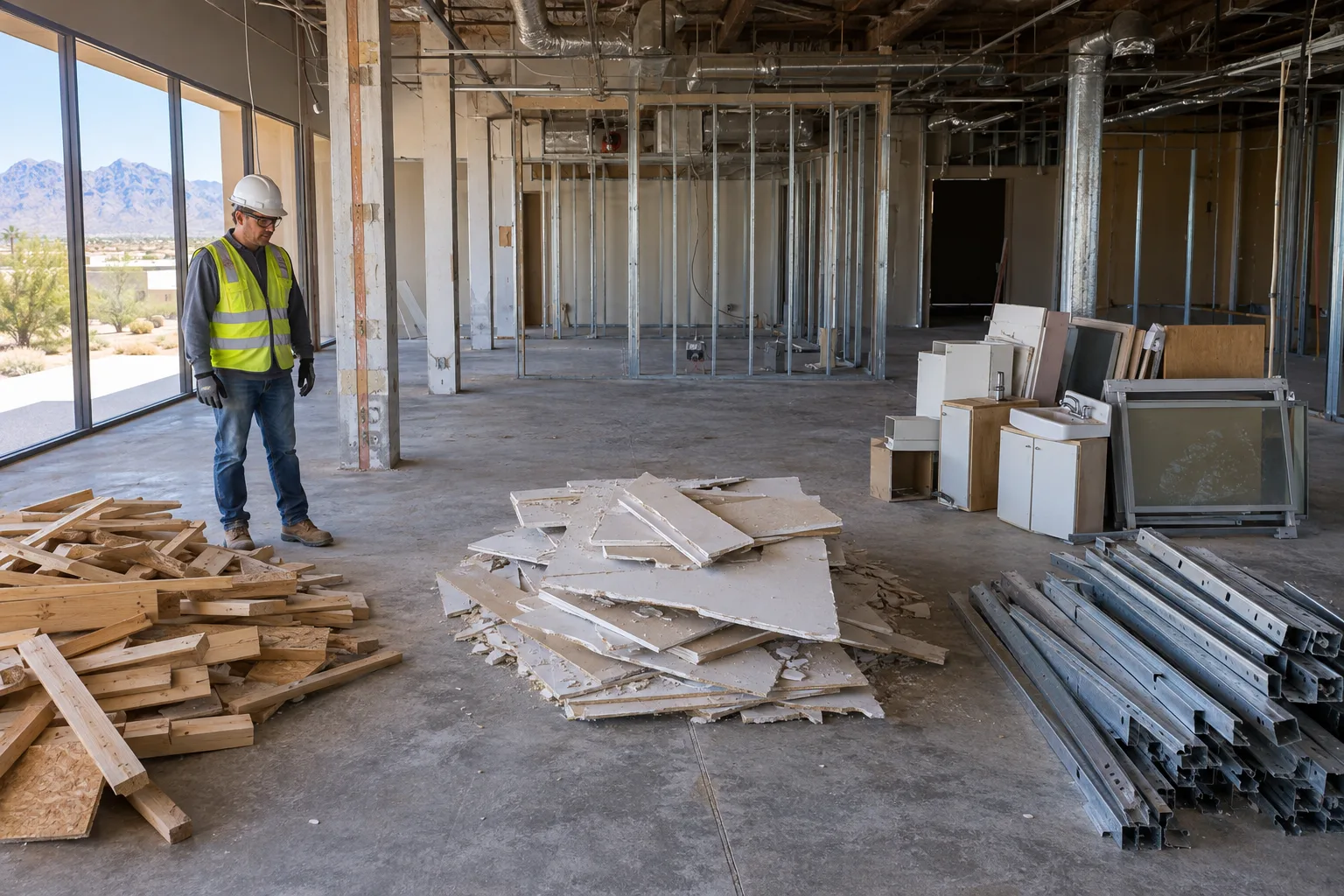
A renovation debris plan should name each material stream, its temporary storage location, the person who can classify it, and the intended receiving facility. Keep unknown or potentially regulated material out of an ordinary junk load until it is properly identified.
Identify the work before the waste
List what the renovation is changing: partitions, ceiling tile, flooring, cabinetry, doors, plumbing fixtures, electrical equipment, roofing, or exterior material. Building age and previous uses can affect what testing or review is needed, but age alone does not classify a material.
ADEQ notes that demolition or renovation activity may trigger asbestos notification requirements and other permits depending on the project. The agency recommends contacting permit liaisons when requirements are uncertain. Check ADEQ’s demolition and renovation permit page.
Separate materials while they are still easy to recognize
| Stream | Keep separate from | Planning question |
|---|---|---|
| Clean wood and reusable millwork | Wet material, trash, coatings, unknown dust | Is there a confirmed reuse or recycling outlet? |
| Metal studs and fixtures | Drywall, insulation, mixed trash | Are sharp ends controlled and pieces safe to handle? |
| Drywall and plaster | Liquids, chemicals, suspected asbestos material | Does the receiving facility accept this specific material? |
| Doors, cabinets, plumbing fixtures | Breakage and demolition debris | Has a recipient accepted the condition and quantity? |
| Paint, solvents, lamps, batteries, chemicals | Every ordinary debris stream | Which regulated-waste program or specialist applies? |
EPA recommends source reduction, salvage, reuse, and recycling where practical, but also warns that some construction and demolition materials may contain federally regulated substances such as asbestos, PCBs, or lead. Read EPA’s construction and demolition best practices.
Stop when the material is uncertain
Do not break, sweep, bag, or load suspected asbestos-containing material as ordinary debris. Do not pour liquids together or rely on smell and appearance to identify a chemical. Keep labels and safety information with the container, restrict access, and ask the responsible environmental or safety contact what applies.
Pima County explains that hazardous waste can be solid, semi-solid, liquid, or contained gas and that generator status is determined monthly. Review the Pima County Hazardous Waste Program. The Small Business Waste Assistance Program may provide a local disposal or recycling option for qualifying business hazardous waste; current details are linked from Pima County’s business resources.
One-page debris plan
- Project address, responsible contractor, facility contact, and removal contact.
- Materials expected from each part of the renovation.
- Testing, permit, or notification decisions and who made them.
- Separate storage zones that do not block exits or active work.
- Confirmed receiving facility or outlet for each material stream.
- Handling plan for sharp, heavy, unstable, or weather-sensitive material.
- Procedure for an unknown container or unexpected suspect material.
- Final walk-through before the removal vehicle leaves.
GreenWay can discuss sorted, non-hazardous commercial renovation debris within its commercial service scope. Share the plan and site photos through the direct contact options. Material acceptance must be confirmed for the actual load.
Sources and applicability
Sources retrieved September 24, 2026. ADEQ and Pima County pages apply to Arizona and Pima County respectively. EPA guidance is national. This article is planning information, not a material determination or compliance opinion.