
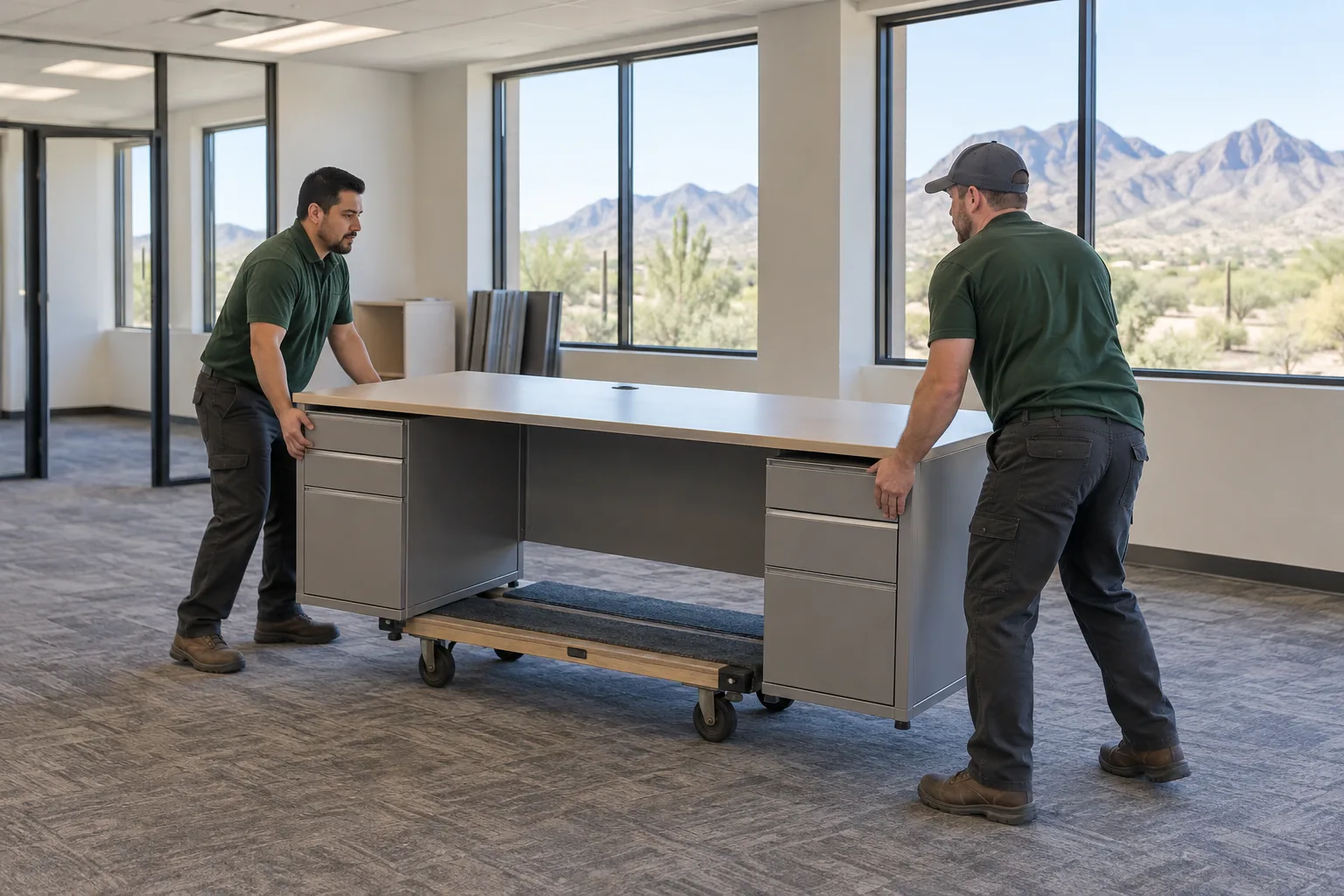
Plan furniture removal from the exit backward. Decide which teams or rooms must remain usable, reserve the elevator or loading area, then schedule each zone so removed furniture never blocks an active corridor.
Choose the order before moving day
Start with a floor plan or a rough sketch. Mark active work areas, furniture to remove, the path to the exit, and a temporary staging point if the loading area cannot accept items continuously. Avoid building a large staging pile in a corridor. Furniture should move through the route, not become the route.
Remove unused meeting rooms and back offices first when that gives the crew space to work without crossing active teams. Shared printers, network equipment, and reception furniture often need a later window because the business still depends on them.
| Business condition | Useful sequence | Main risk to control |
|---|---|---|
| Employees remain on site | Close one zone at a time and keep a separate staff path. | People entering the lifting route. |
| Lease turnover | Remove business contents, then verify landlord fixtures. | Removing property that stays with the suite. |
| New furniture delivery | Clear and sweep each destination before delivery begins. | Old and new furniture competing for the same dock. |
| Multi-floor office | Reserve elevator blocks and finish one floor or zone before the next. | Uncontrolled elevator use and scattered staging. |
Pick a removal window that matches the building
Ask the property manager about loading hours, freight-elevator rules, certificates or vendor documents, dock reservations, door protection, noise limits, and after-hours access. Do not promise employees an end time until the provider has seen the volume and route.
If work continues during removal, name a site contact and give employees a separate entrance or walkway. Put the cleanout schedule on the internal calendar and tell staff which rooms, elevators, or doors are temporarily unavailable.
Measure the difficult parts
Record doorway and elevator dimensions for large desks, conference tables, shelving, and assembled workstations. Note tight turns, low ceilings, steps, sloped walks, door thresholds, and the distance from the exit to the vehicle. Photographs should show the whole obstruction, not only a close crop.
Mechanical aids reduce carrying, but they still need clearance. OSHA recommends carts or mechanical lifting methods where appropriate and warns that awkward postures and forceful handling can contribute to injury. See OSHA’s material-handling examples. OSHA also requires clear aisles and safe clearances where mechanical handling equipment is used. See the general materials-handling rule.
Do not ask office staff to “get a head start” by carrying heavy desks or cabinets unless that work is part of their job, properly planned, and supported by suitable equipment and training.
Questions to ask a removal provider
- What information do you need to estimate the furniture and access route?
- Who disassembles modular furniture, and what happens to loose hardware?
- What equipment needs elevator, doorway, or floor clearance?
- How are additions to the approved item list handled?
- Which electronics, batteries, lamps, or liquids must be separated?
- What must the building provide before arrival?
- How will the site contact confirm that each zone is complete?
A good plan makes the provider’s limits as clear as its capabilities. Read GreenWay’s commercial service scope, then use the direct contact checklist to describe your office.
Sources and applicability
Sources retrieved September 24, 2026. OSHA references apply to workplace material handling in the United States; employers remain responsible for evaluating their own workplace and obligations.