
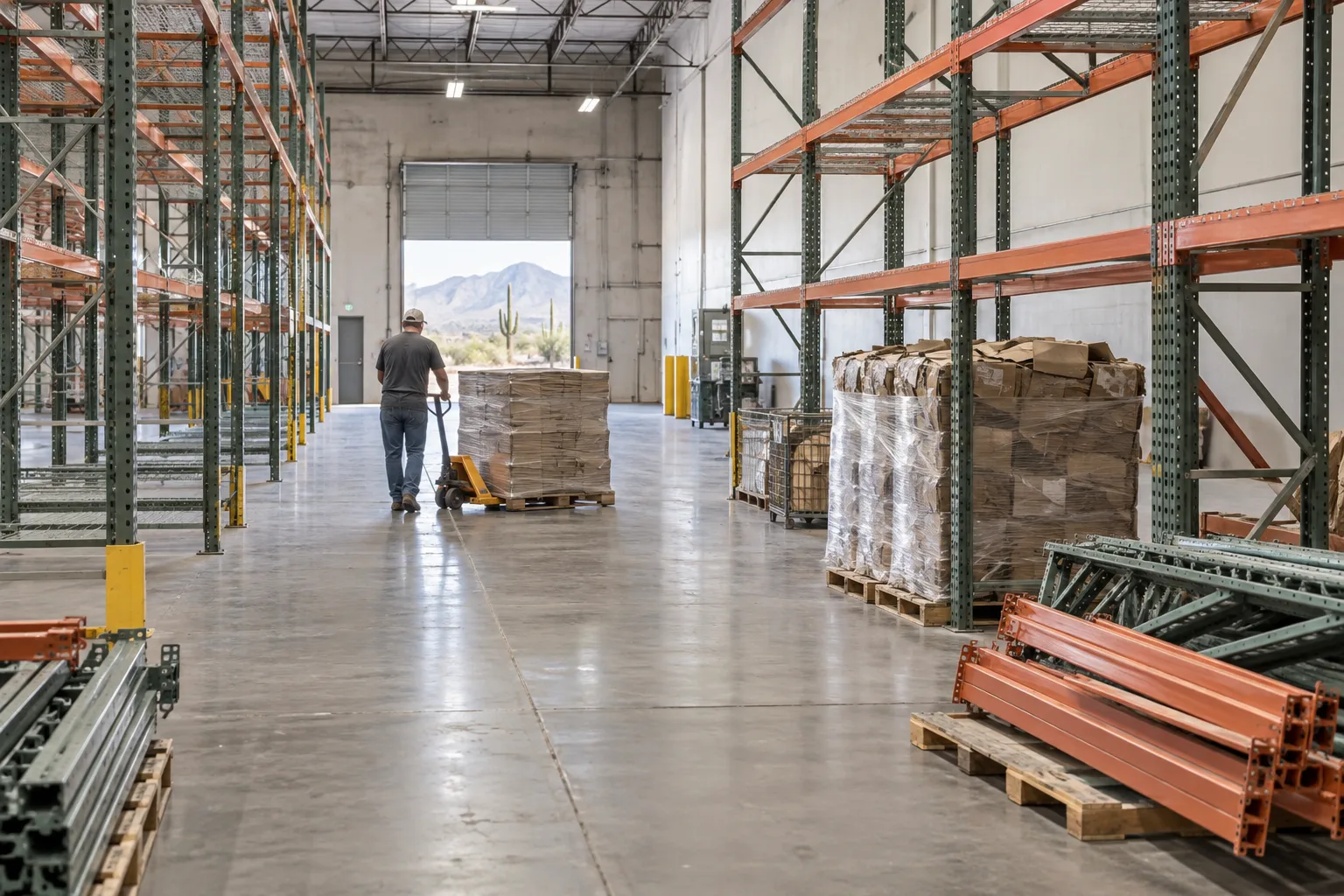
A warehouse cleanout should begin with a floor map, not a loading crew. Mark what is leaving, which aisles must remain open, where equipment can turn, and where each material group will wait without entering a fire route or active work zone.
Map the floor in operating terms
Use the warehouse’s existing aisle, bay, or rack labels. If those do not exist, create temporary zone names that everyone can understand. For each zone, record the contents, approximate pallet or floor space, tallest and heaviest items, and whether the area stays active during the cleanout.
Trace the route to the dock or exterior loading point. Note aisle width, overhead clearance, rack damage, floor transitions, doors, turns, slopes, dock plates, and pedestrian crossings. OSHA requires sufficient safe clearance where mechanical handling equipment is used and says aisles and passageways should remain clear. Review OSHA 1910.176.
Separate material before it becomes a mixed load
| Material group | Preparation | Question to settle |
|---|---|---|
| Reusable inventory | Count, identify an owner, and move it outside the removal zone. | Is it being transferred, sold, donated, or kept? |
| Cardboard and packaging | Keep dry and separate from trash or liquids. | What receiving outlet is available now? |
| Scrap metal and broken racks | Remove product, sharp projections, and loose hardware where safe. | Who is authorized to dismantle anchored or damaged rack? |
| Electronics and battery devices | Inventory, protect data, and separate batteries. | Will a certified electronics recycler receive them? |
| Chemicals or unknown containers | Do not open or combine. Keep identification and records with the material. | Which hazardous-waste rule or program applies? |
Pima County states that hazardous-waste generator status is determined monthly and that businesses should document what waste is generated and when. Use the county’s Hazardous Waste Program page for current local information. An ordinary junk removal estimate should not be used to classify unknown material.
Protect the part of the warehouse that stays live
Separate removal equipment from active forklifts, delivery drivers, customers, and employees. Choose a site supervisor who can stop work if the route changes. If a truck blocks a dock, define which dock and for how long before it arrives.
Stable storage matters during the transition. OSHA says stacked material should be secured against sliding or collapse and storage areas should be free from accumulations that create trip, fire, explosion, or pest hazards. The rule is a baseline; your facility’s safety program may require more.
Warehouse cleanout access worksheet
- Zones or bays included in the scope:
- Zones that must remain active:
- Approved loading point and dock reservation:
- Available aisle width and lowest overhead clearance:
- Powered equipment controlled by the facility:
- Pallet jack or cart route:
- Pedestrian crossings and temporary barriers:
- Anchored, damaged, or leaning rack:
- Material groups and intended destinations:
- Unknown or regulated material held out of the load:
Share the worksheet with the facility manager and removal provider before scheduling. GreenWay can assess ordinary non-hazardous warehouse contents listed in the commercial service scope. Use the contact page to send access details and photos.
Sources and applicability
Sources retrieved September 24, 2026. OSHA requirements apply to covered U.S. workplaces. Pima County hazardous-waste information applies within Pima County, Arizona. Verify current facility procedures and jurisdiction-specific requirements.